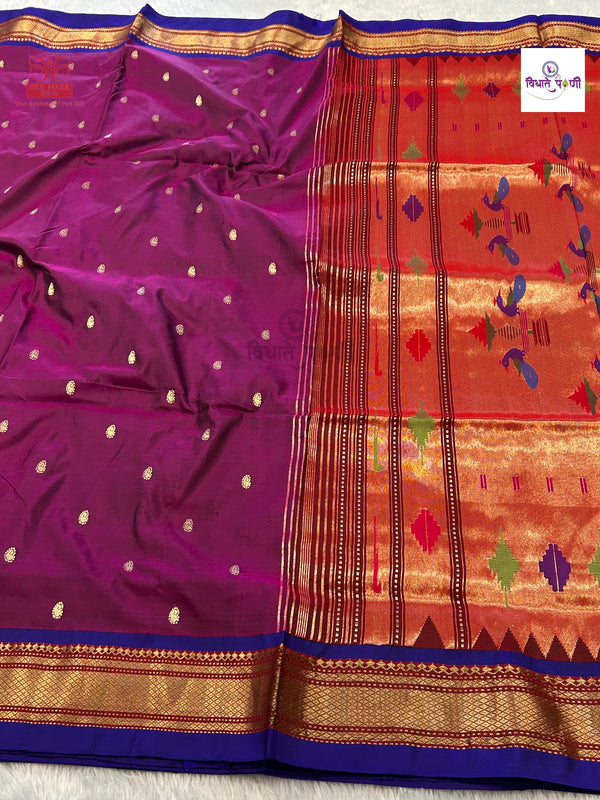
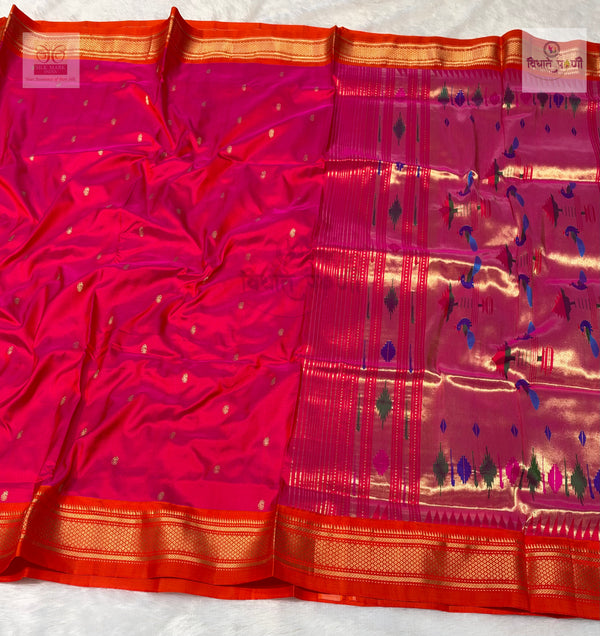
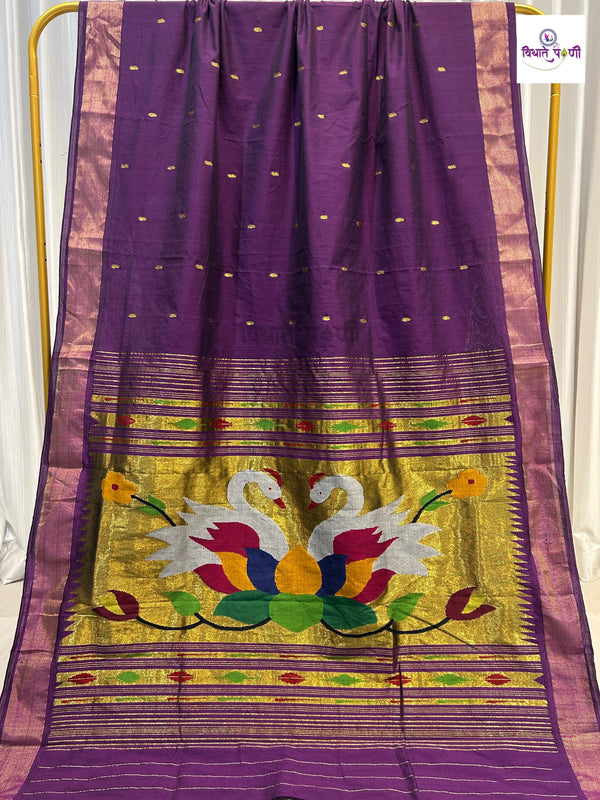
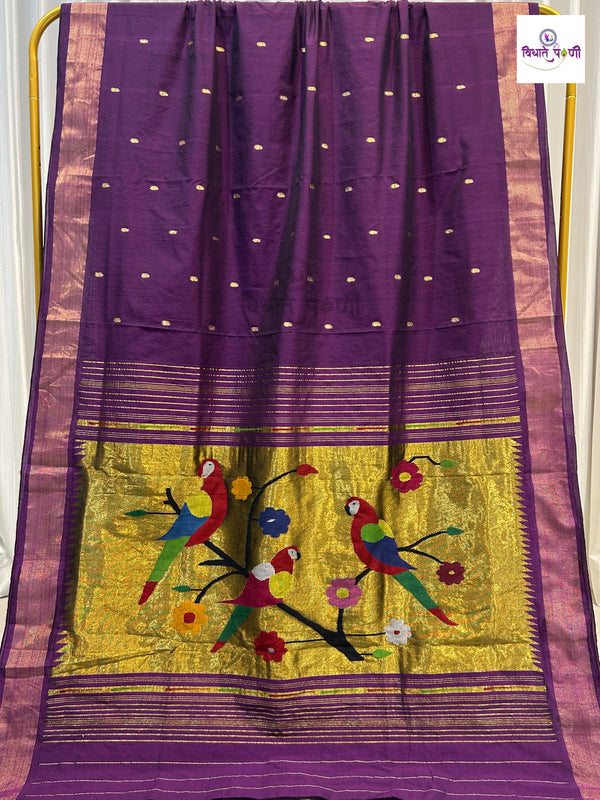
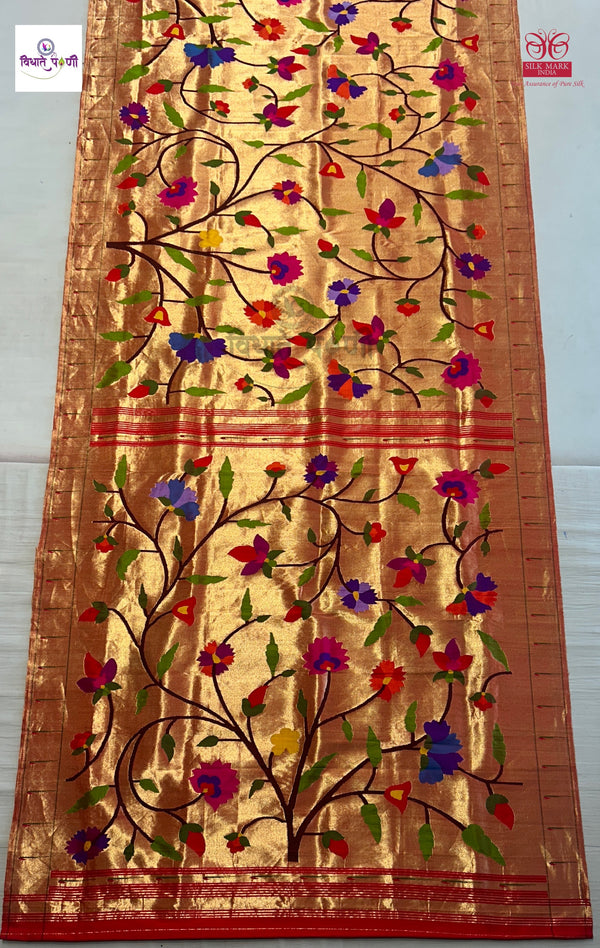
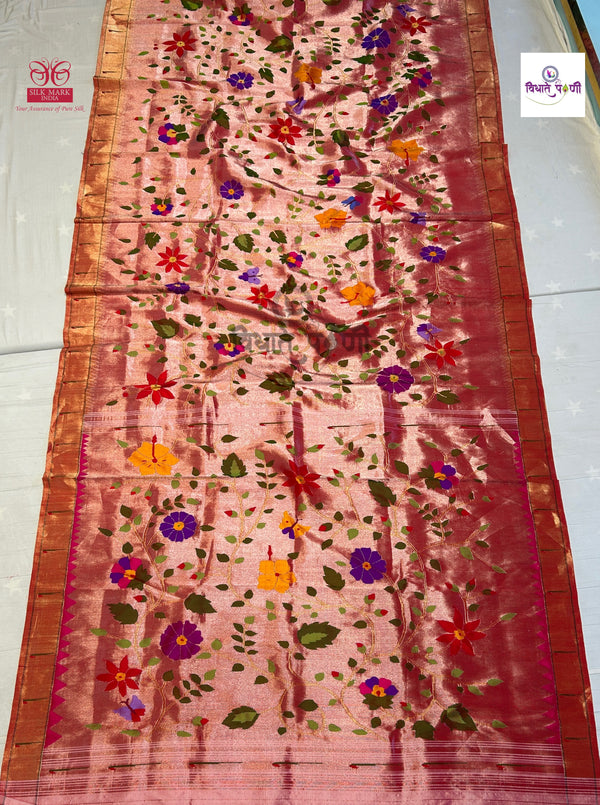
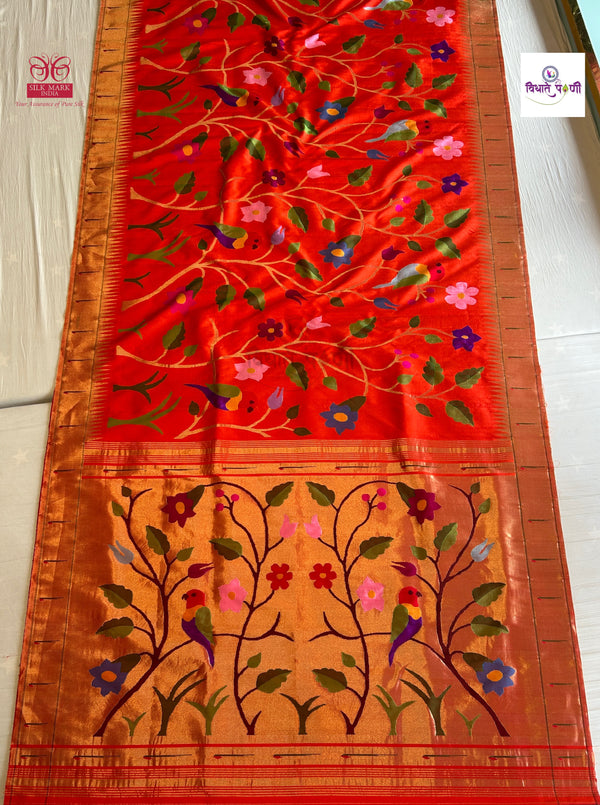
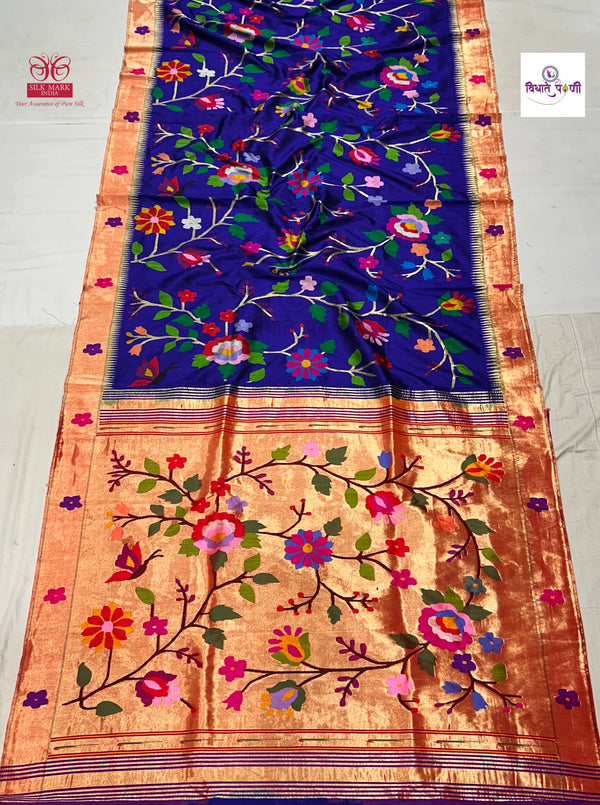
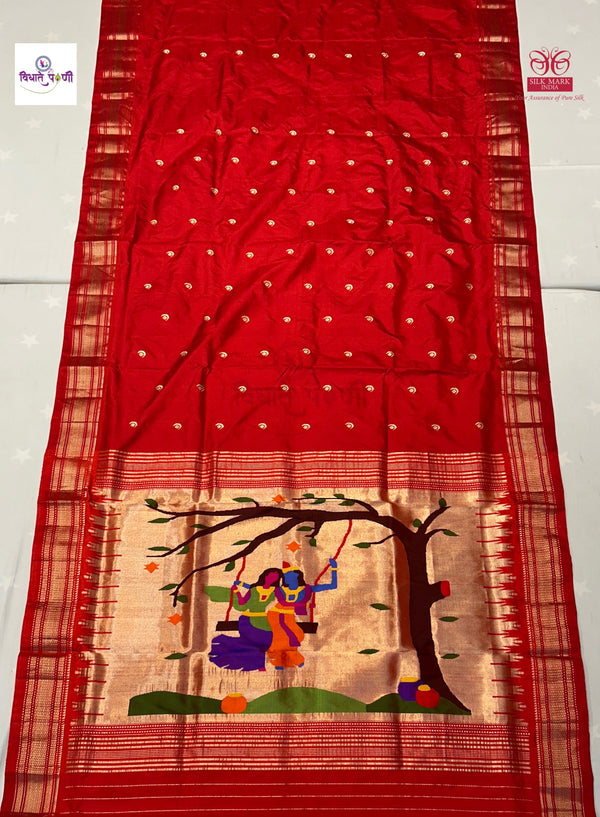
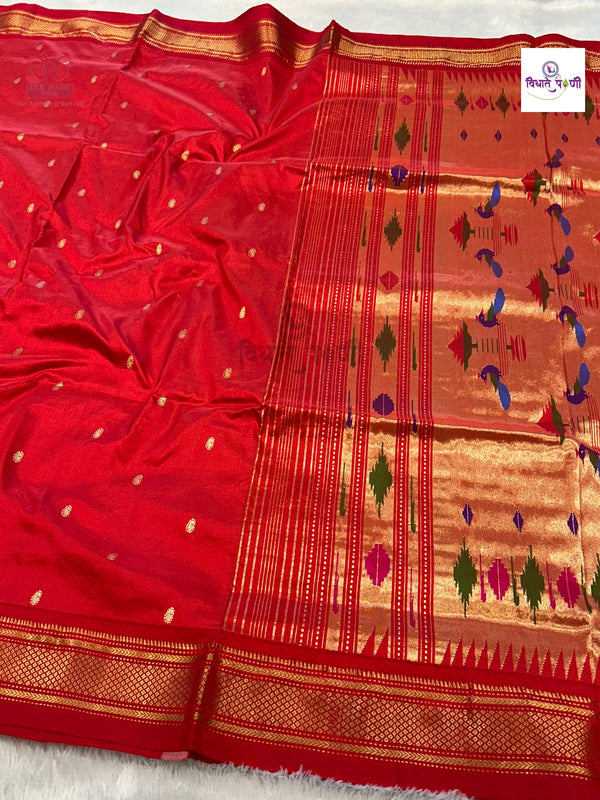
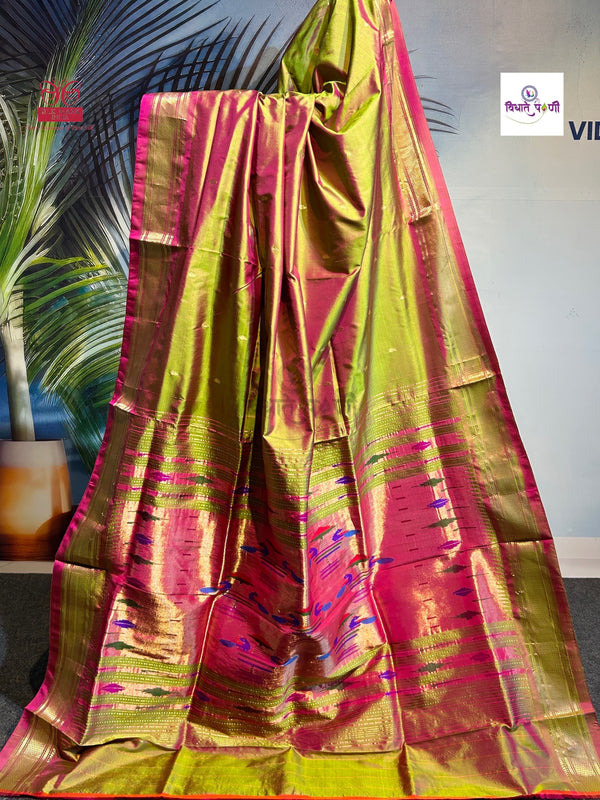
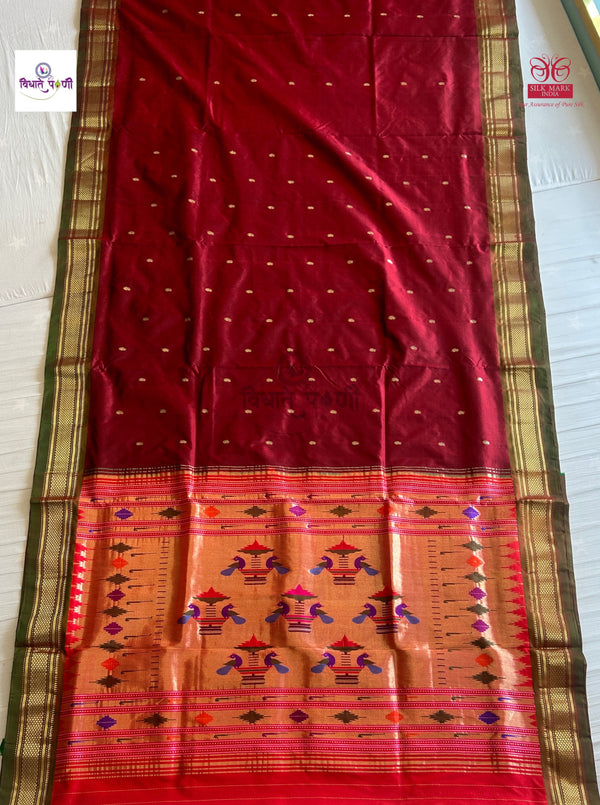
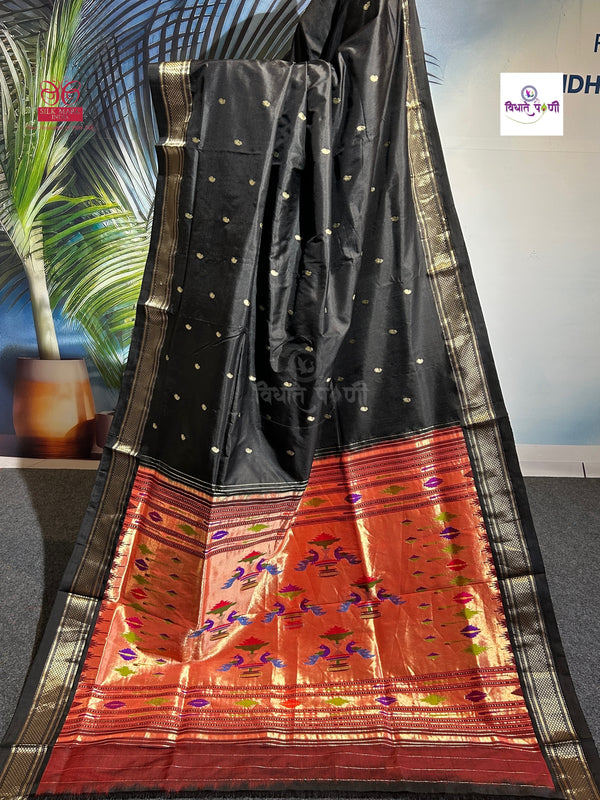
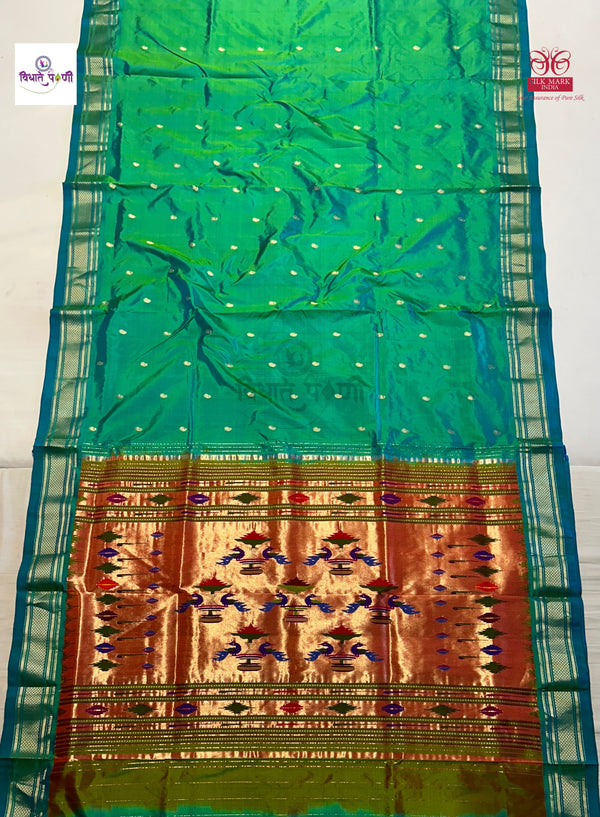
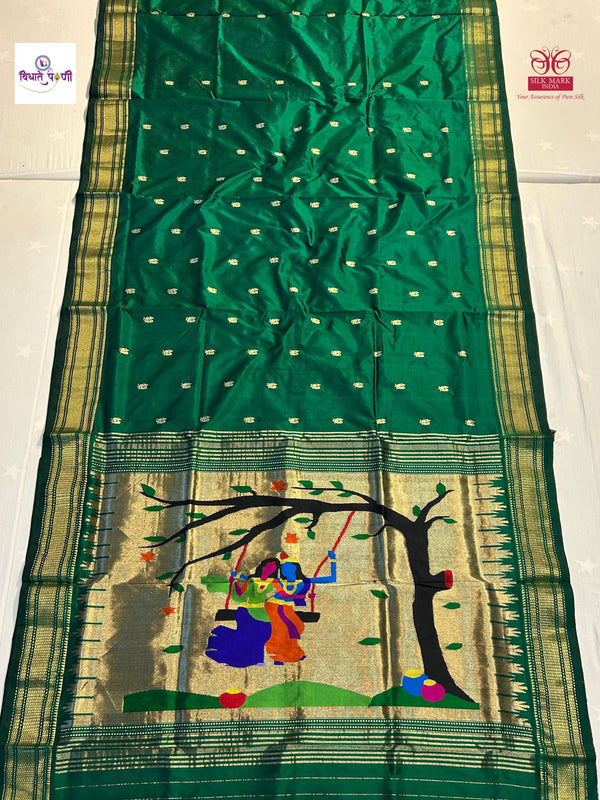
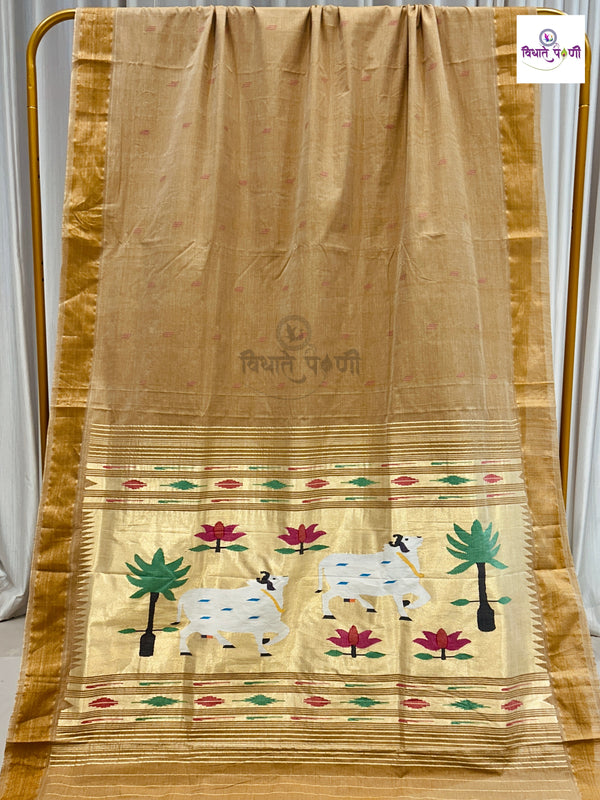
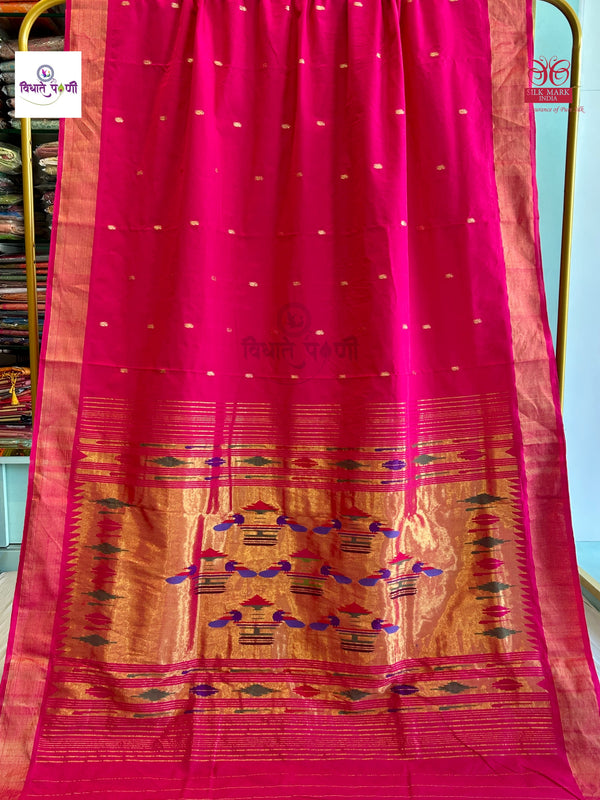
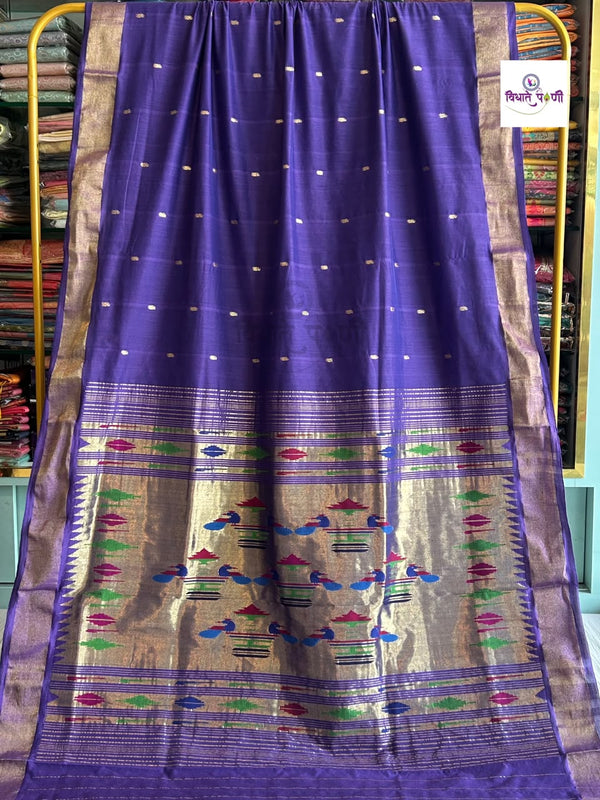
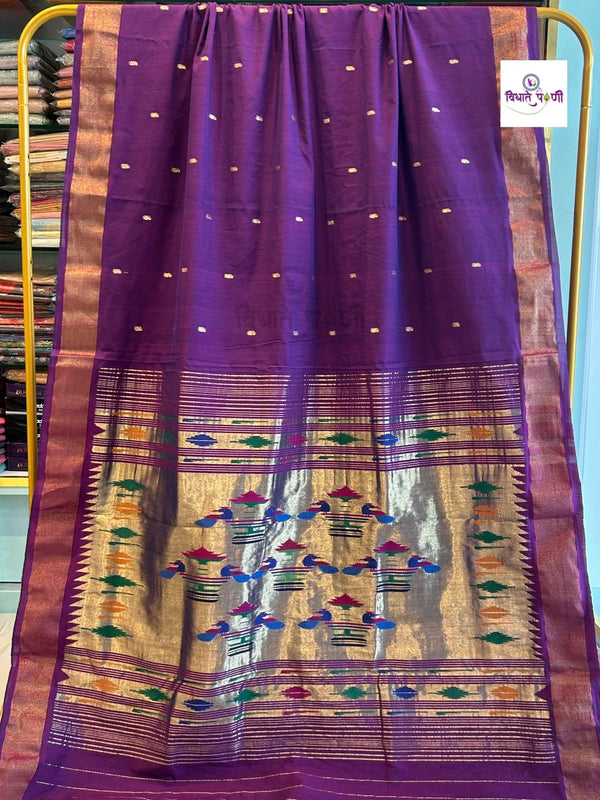
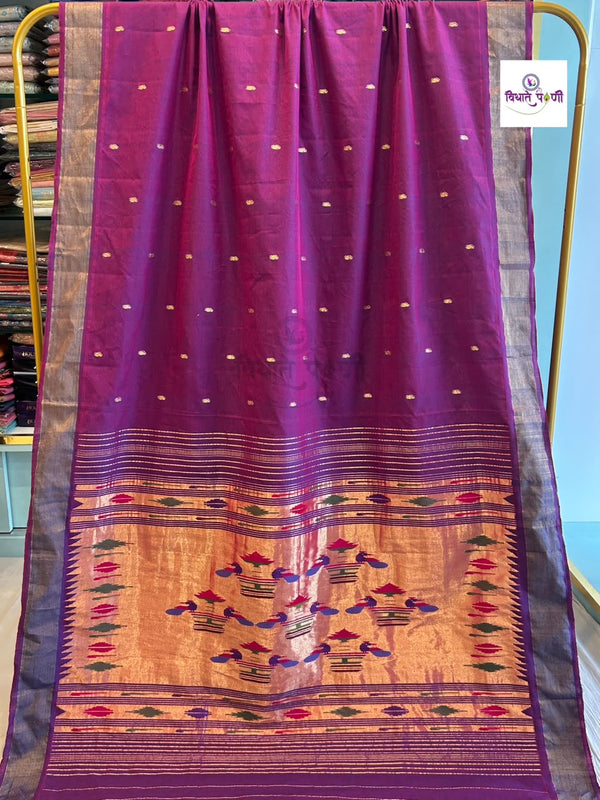
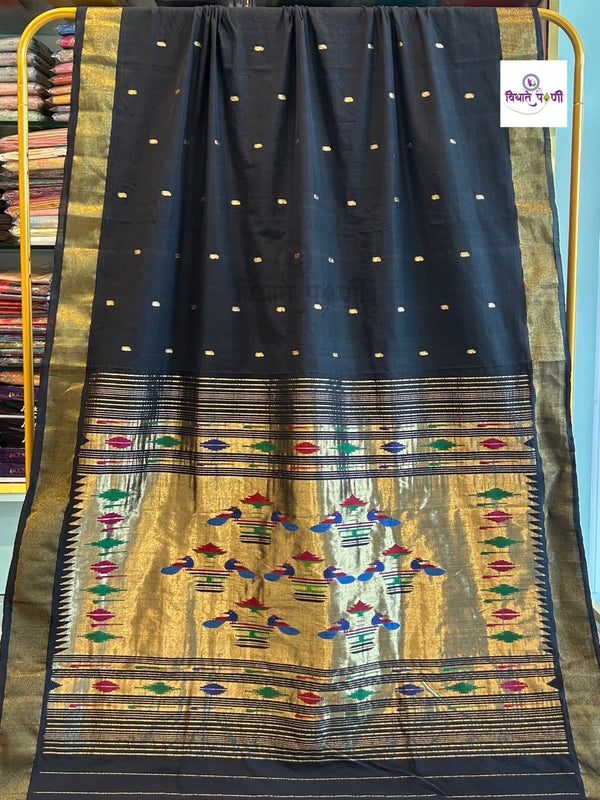
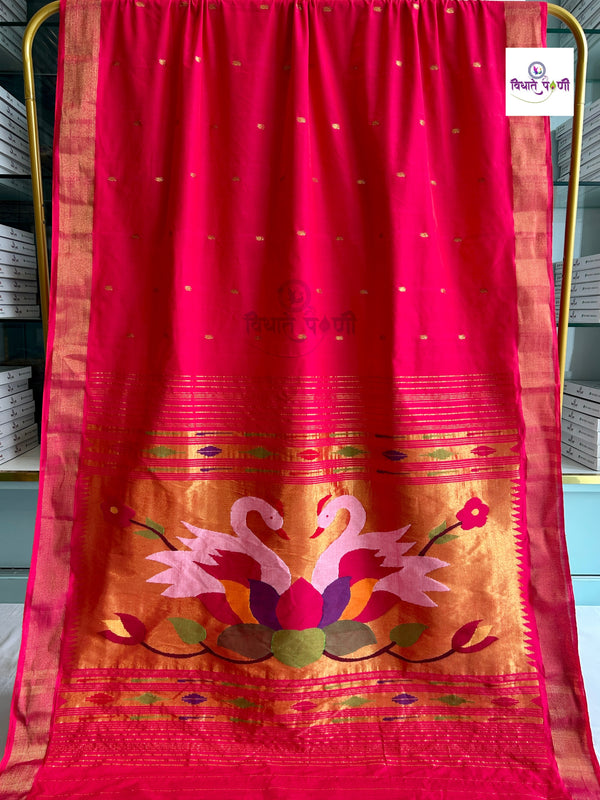
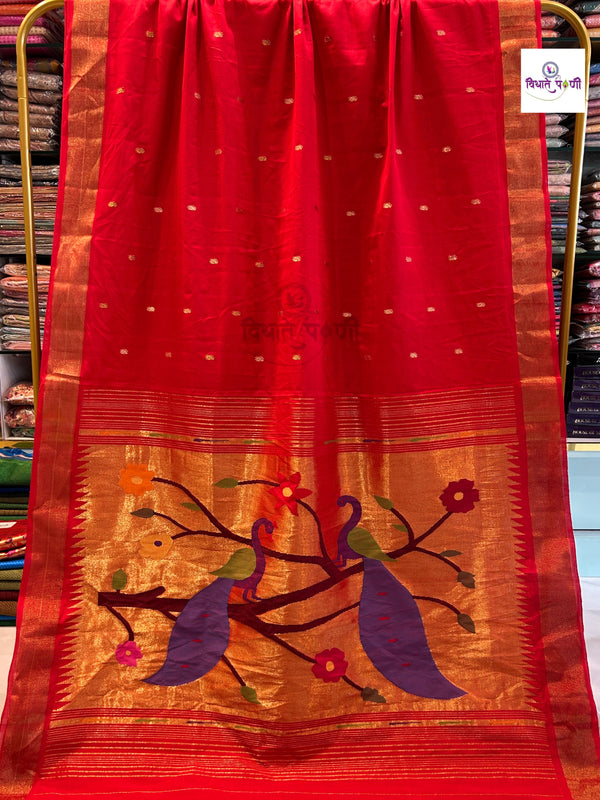
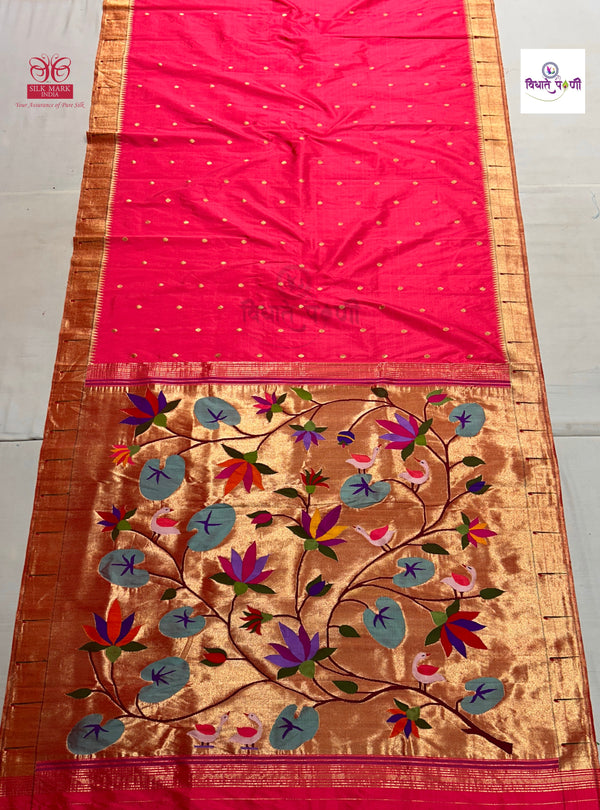
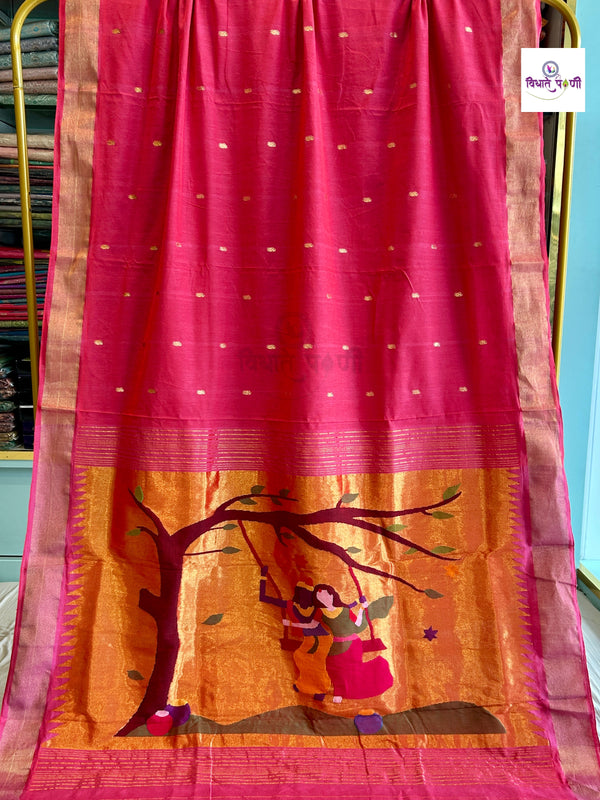
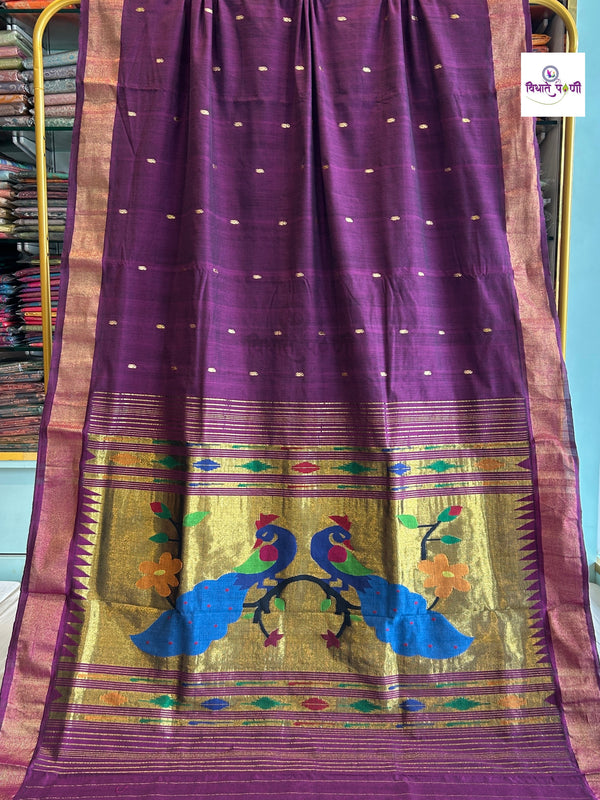
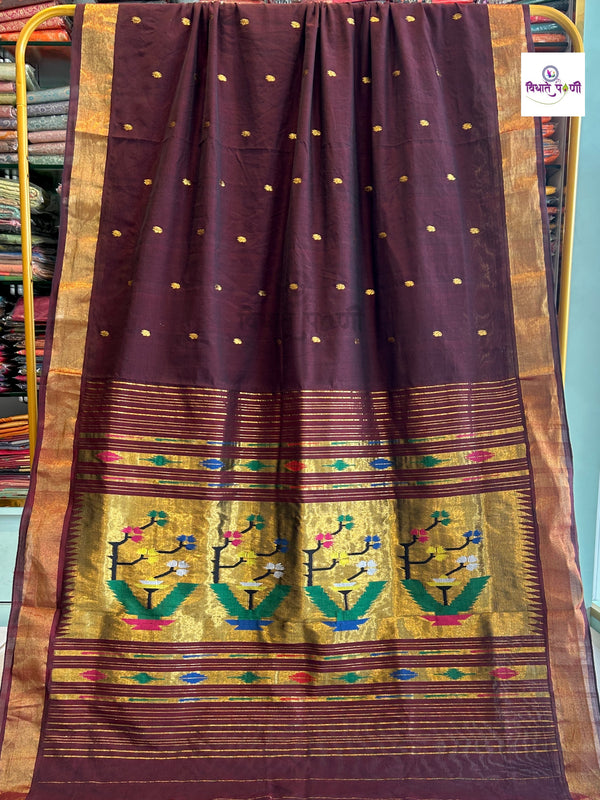
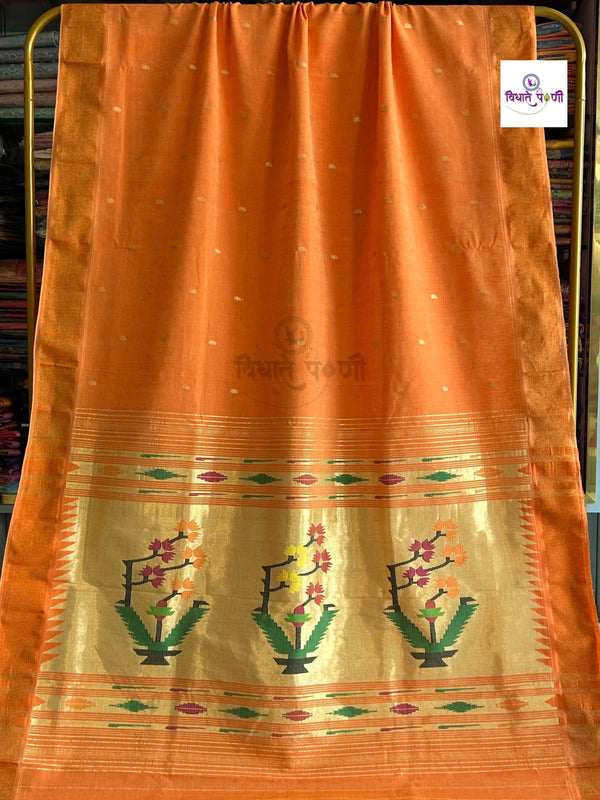
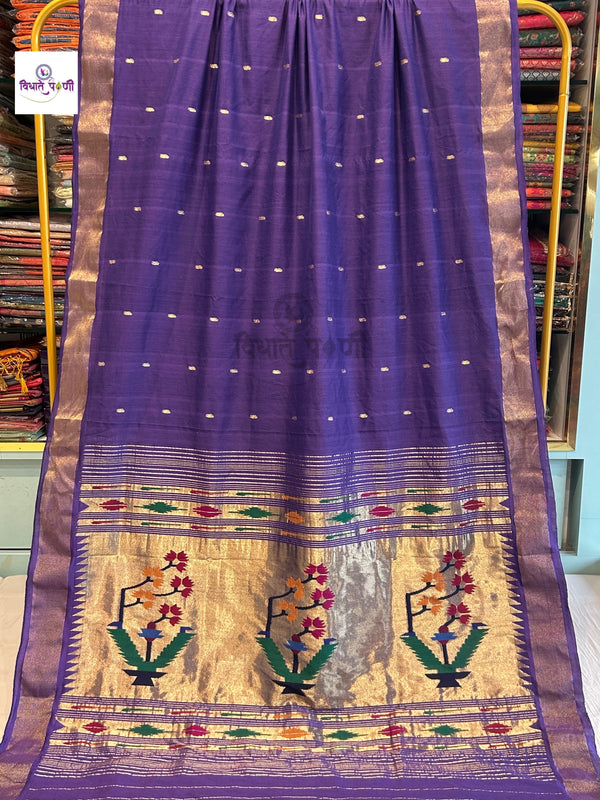
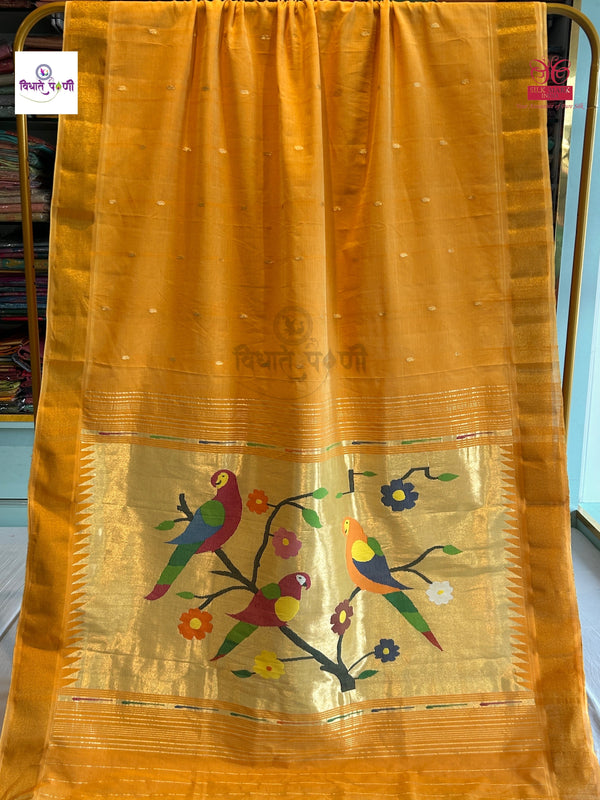
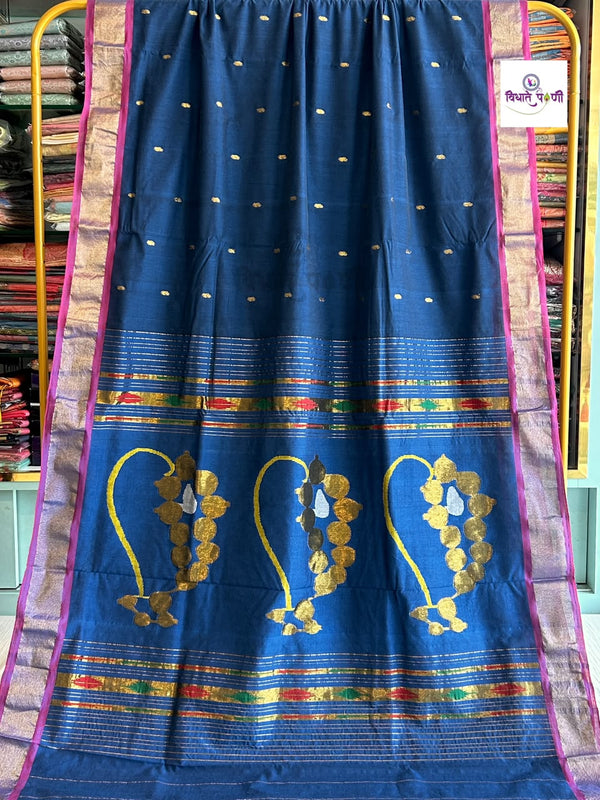
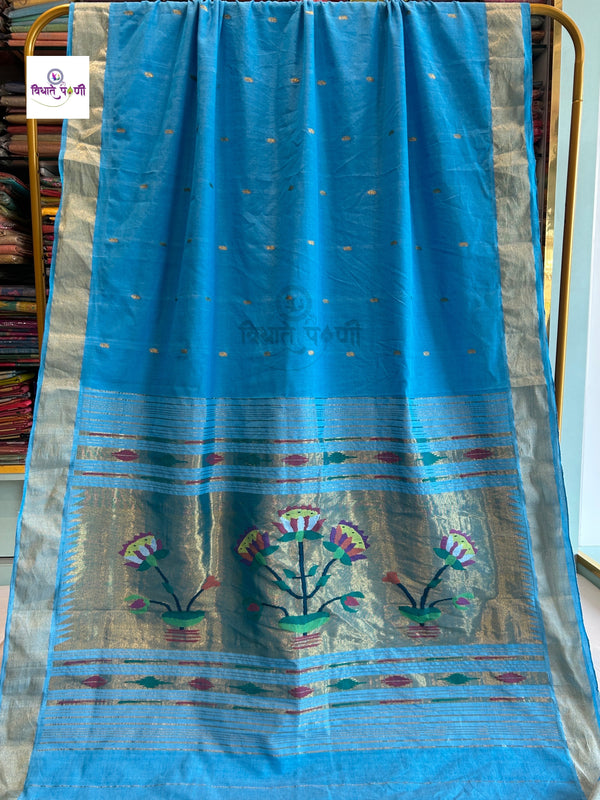
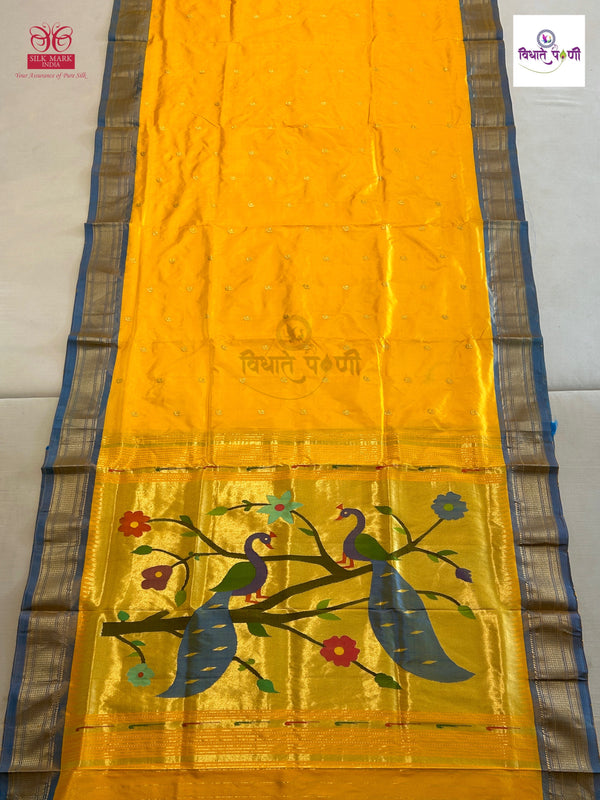
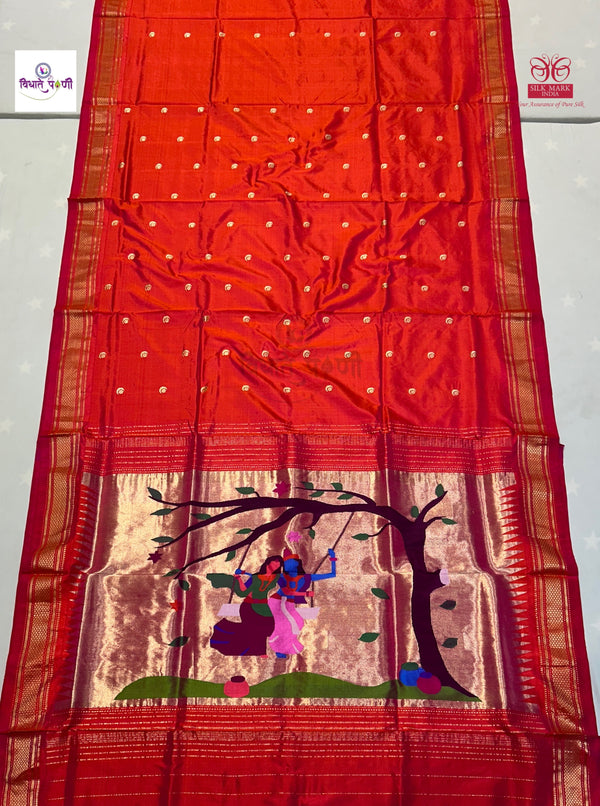
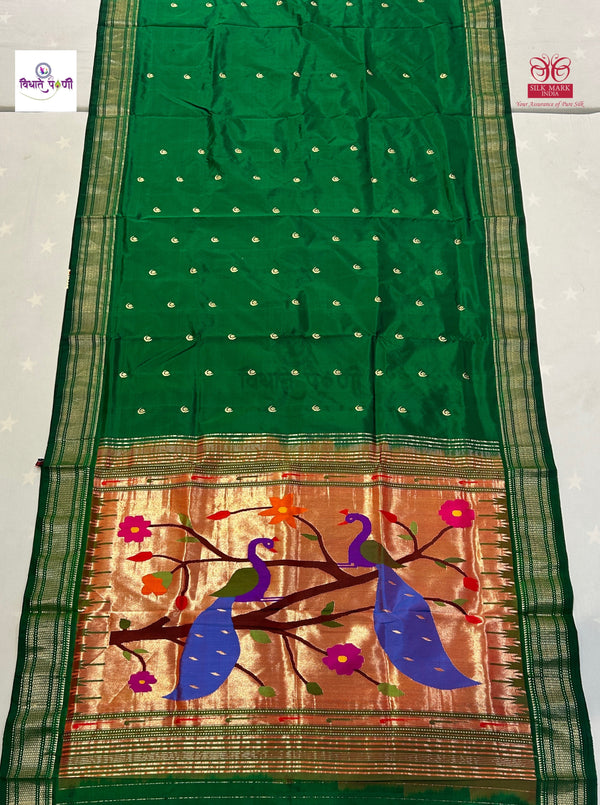
About Paithani Sarees
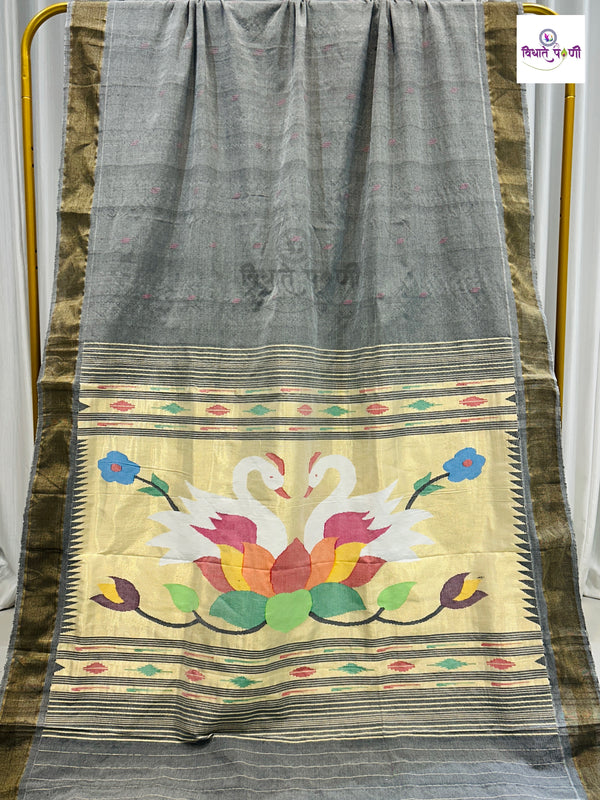
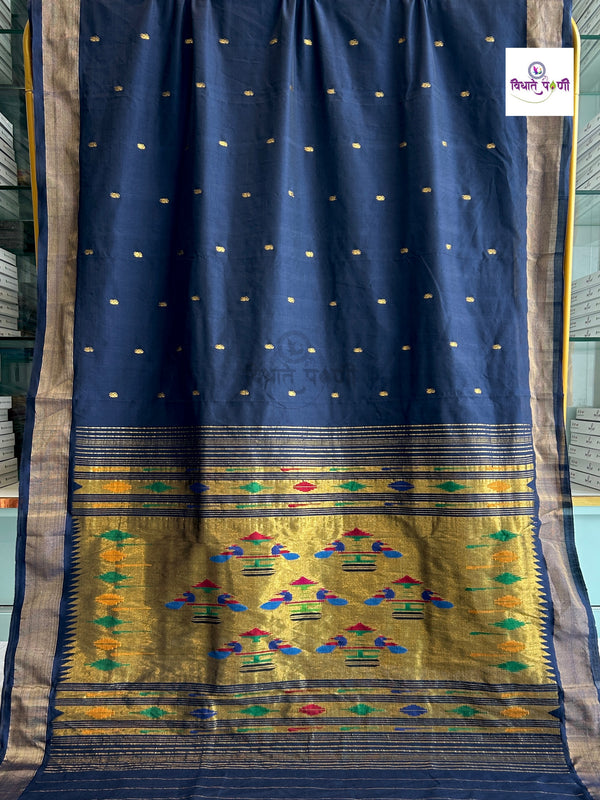
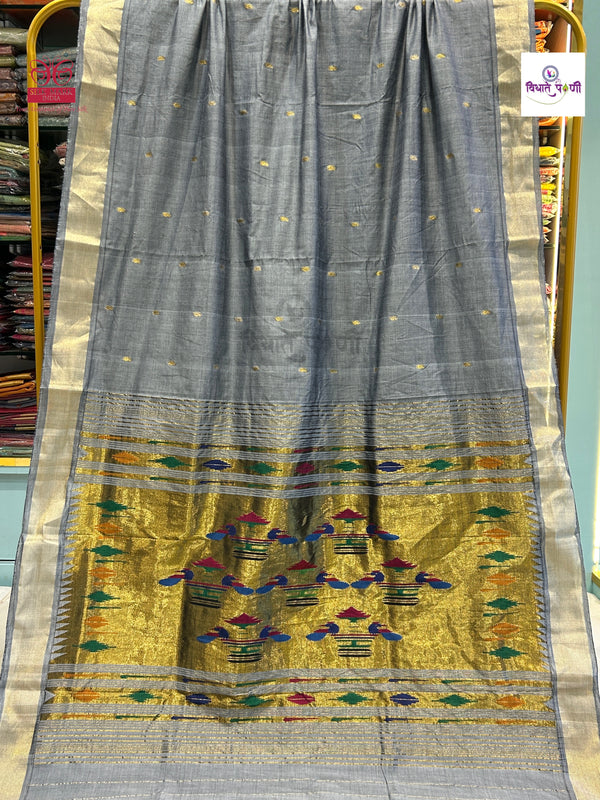
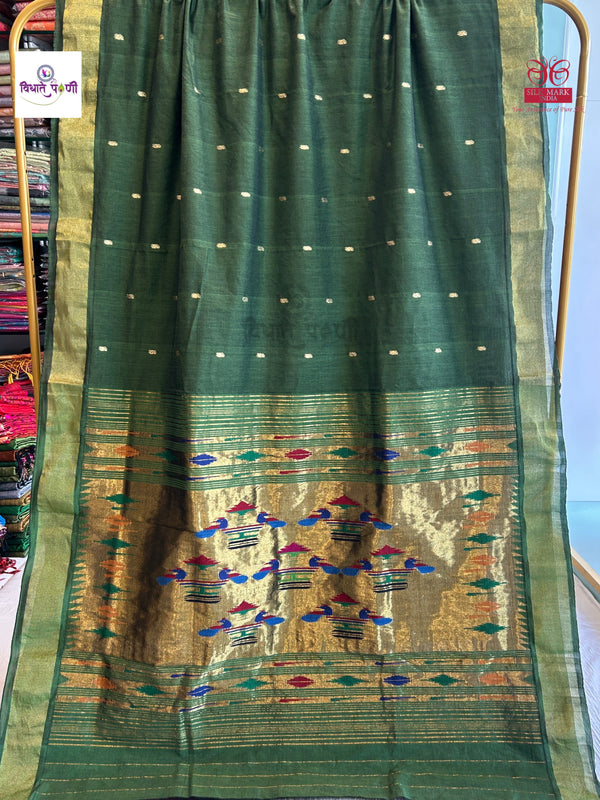
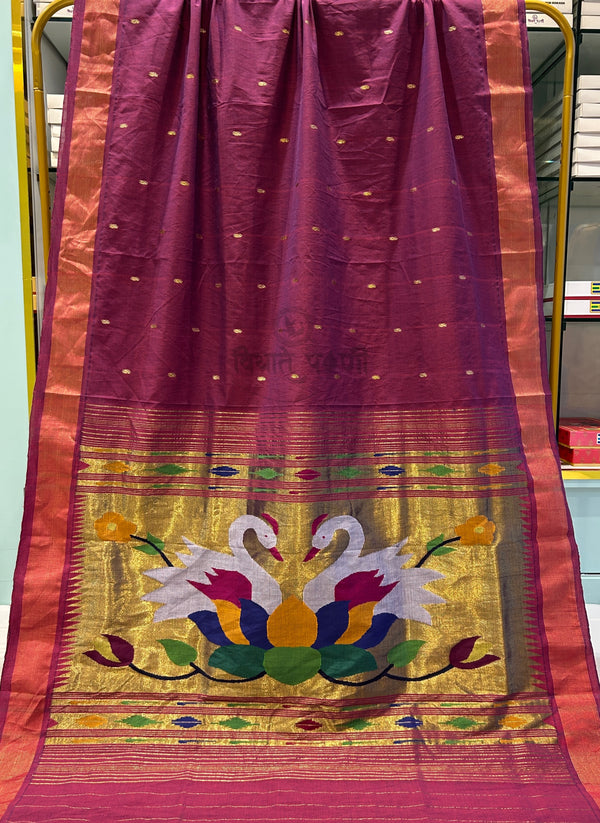
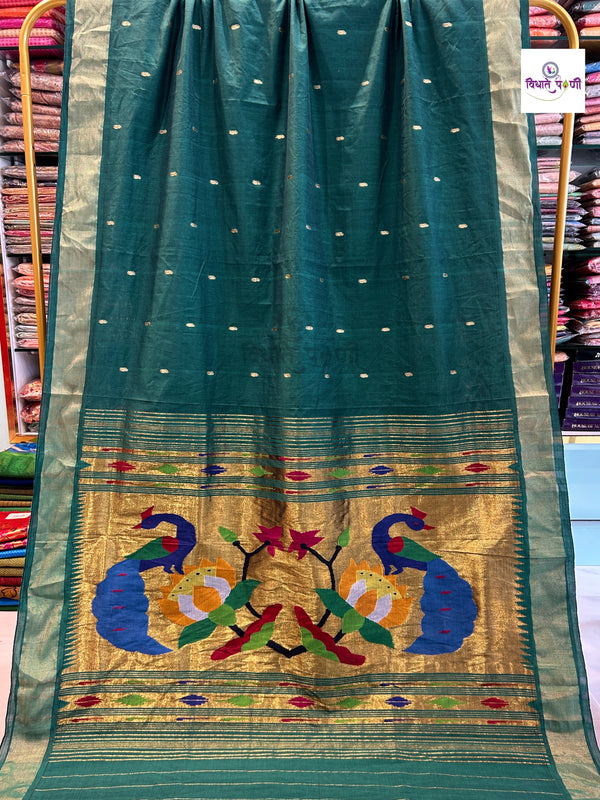
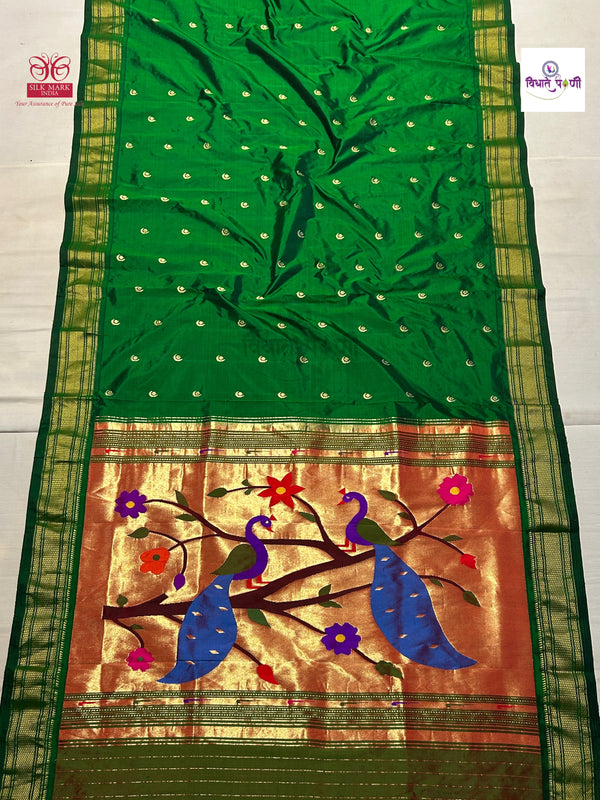
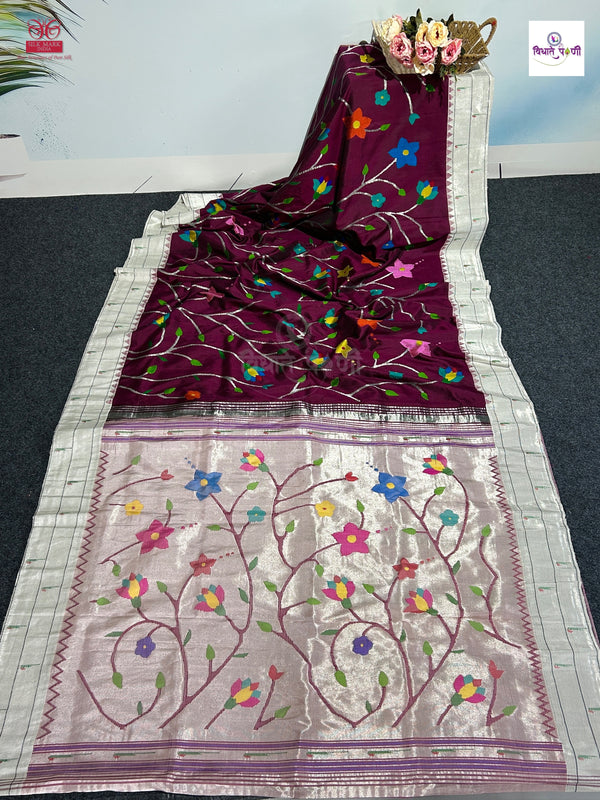
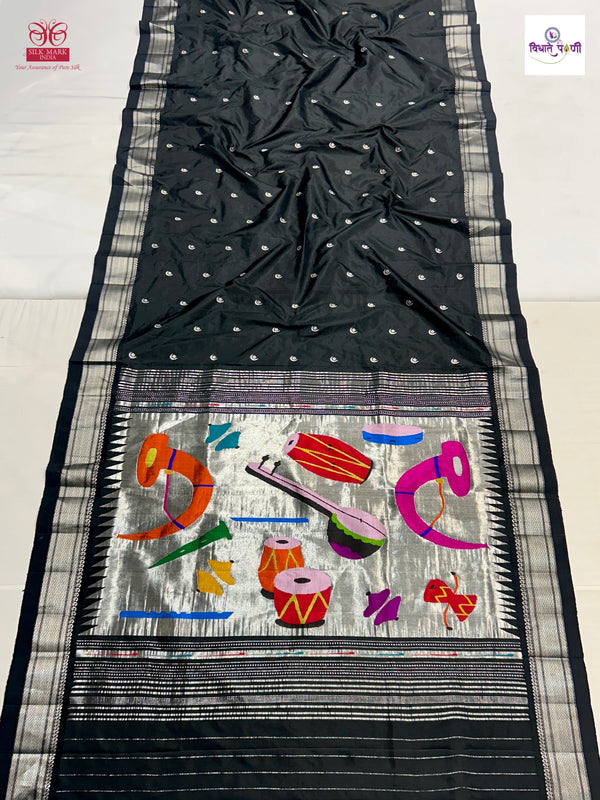
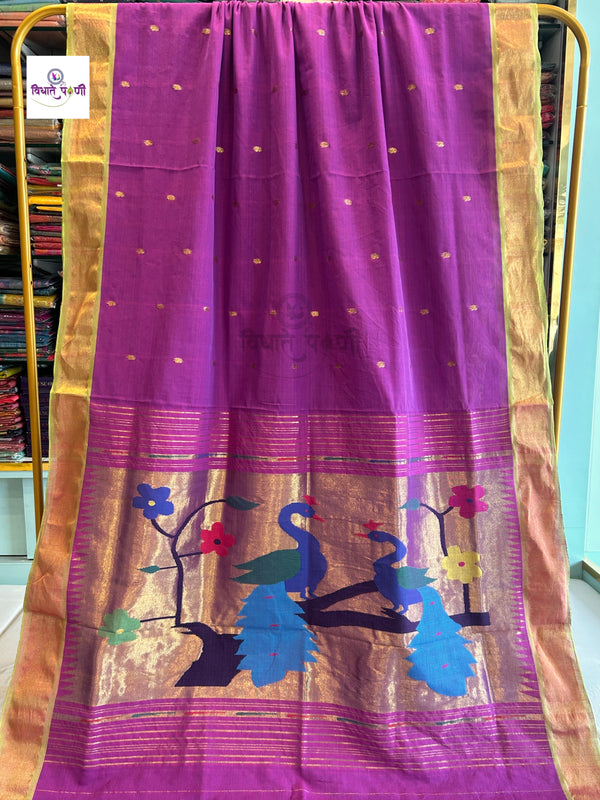
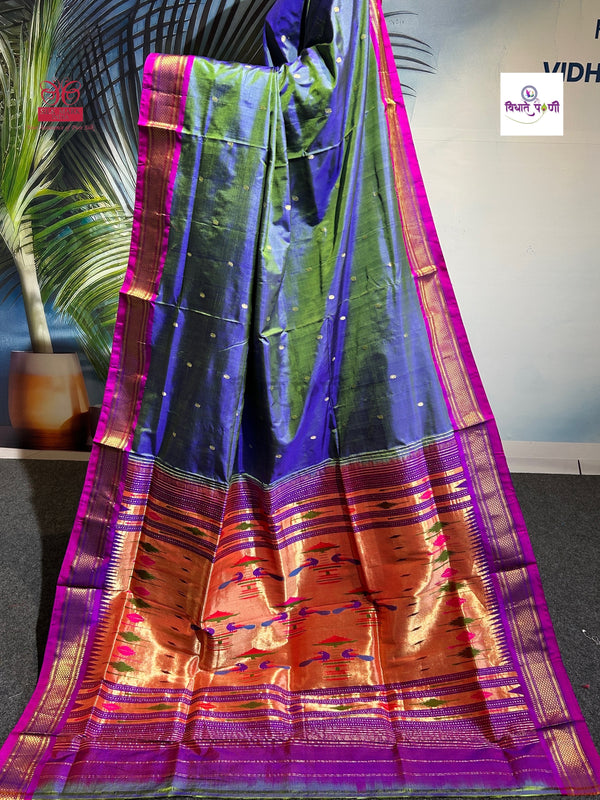
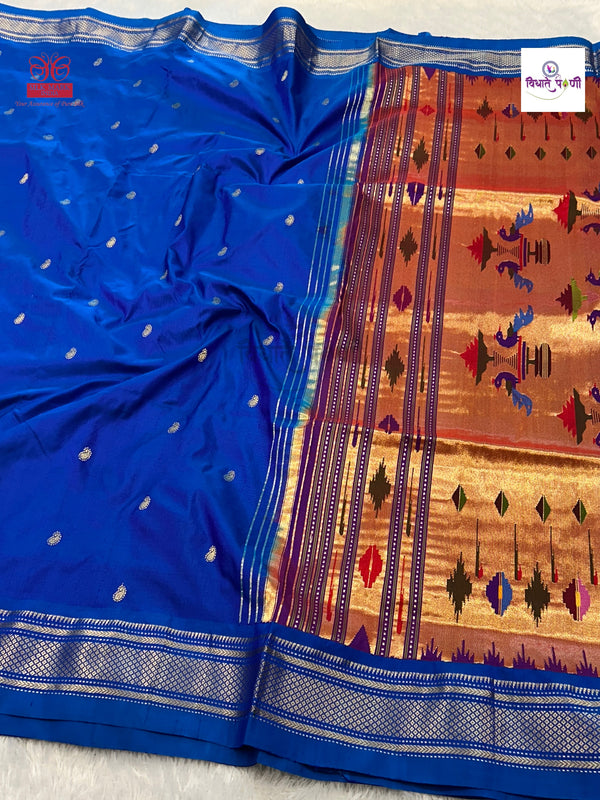
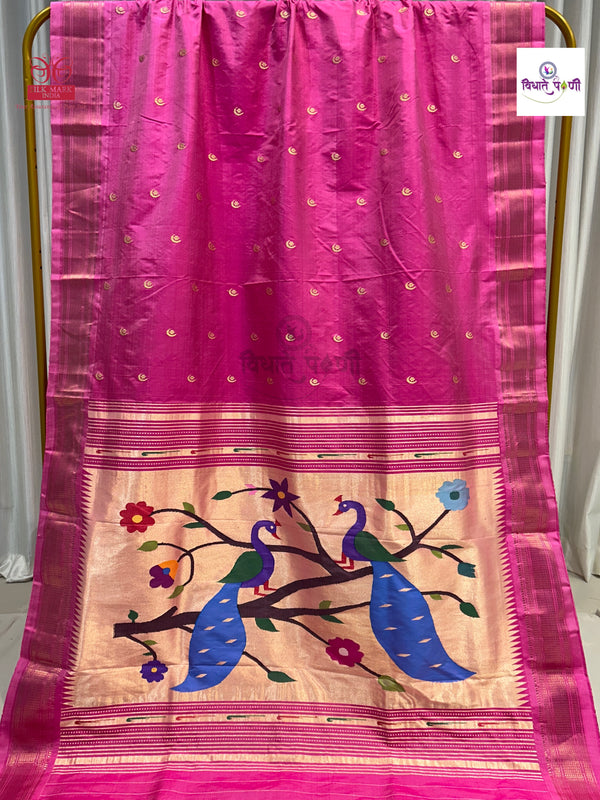
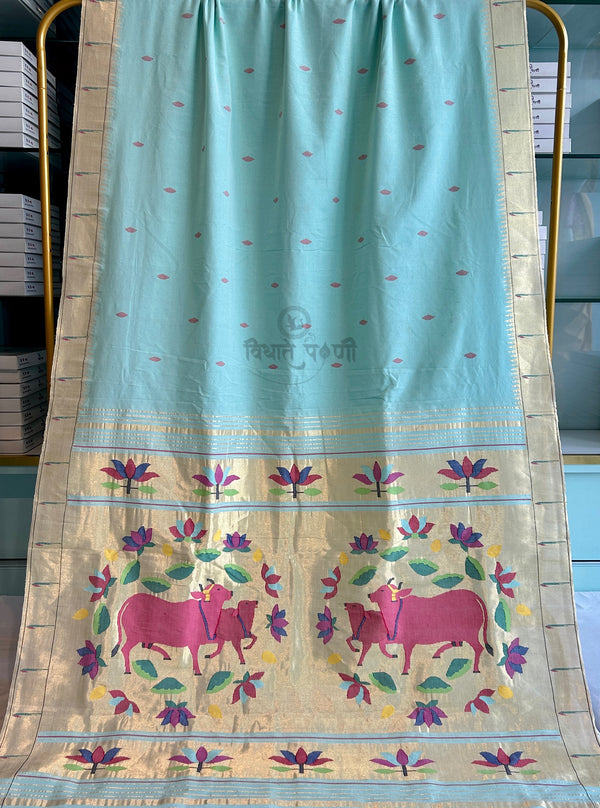
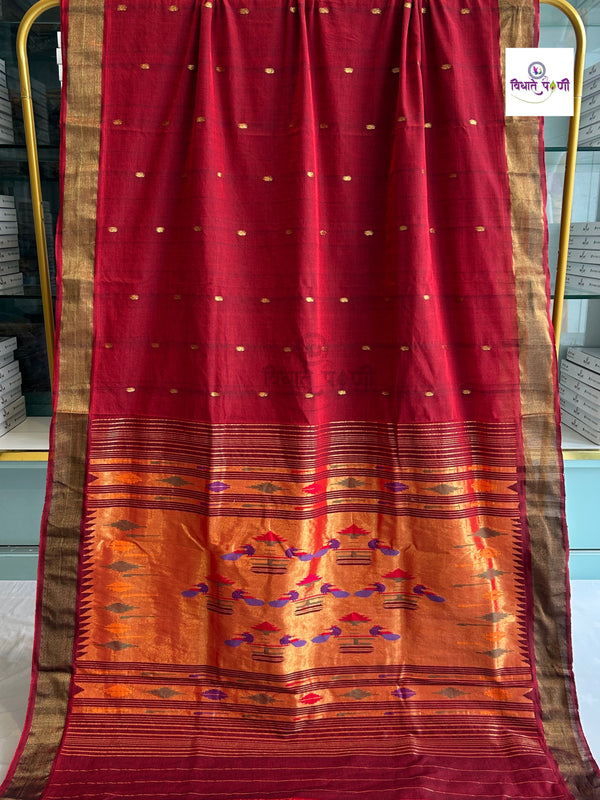
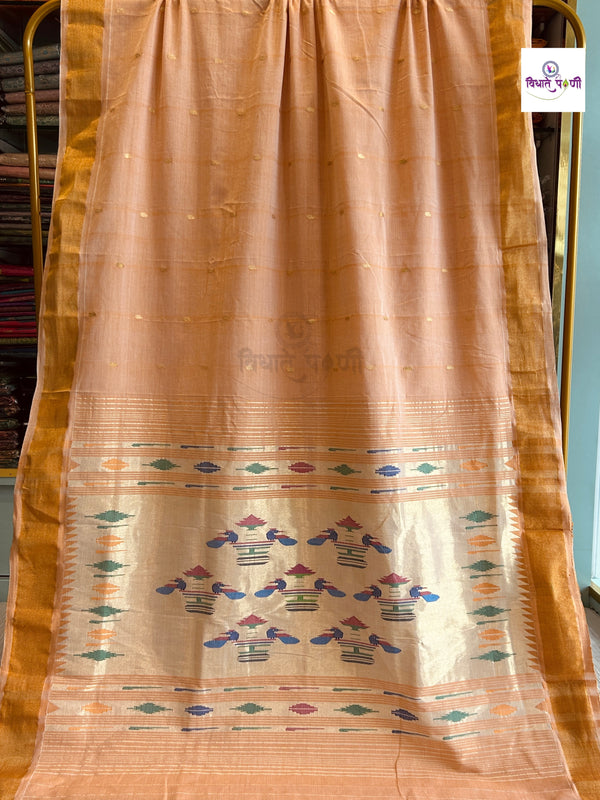
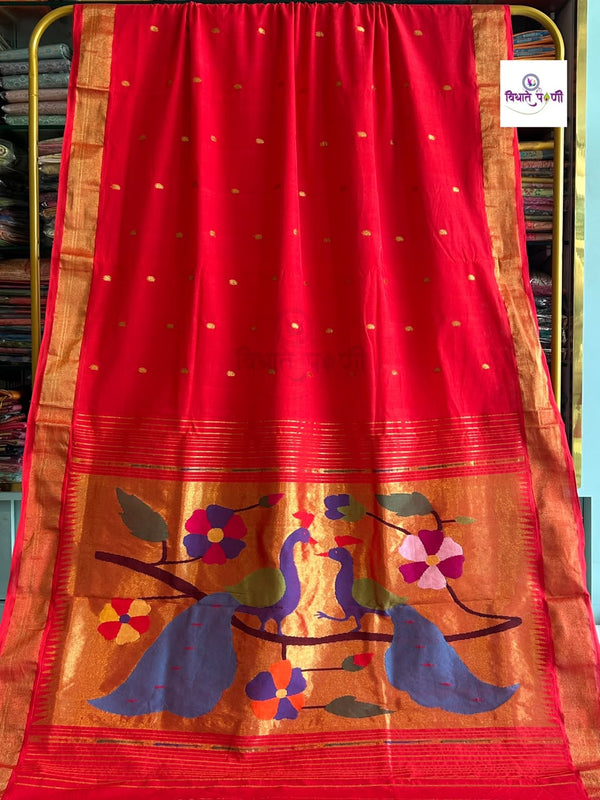
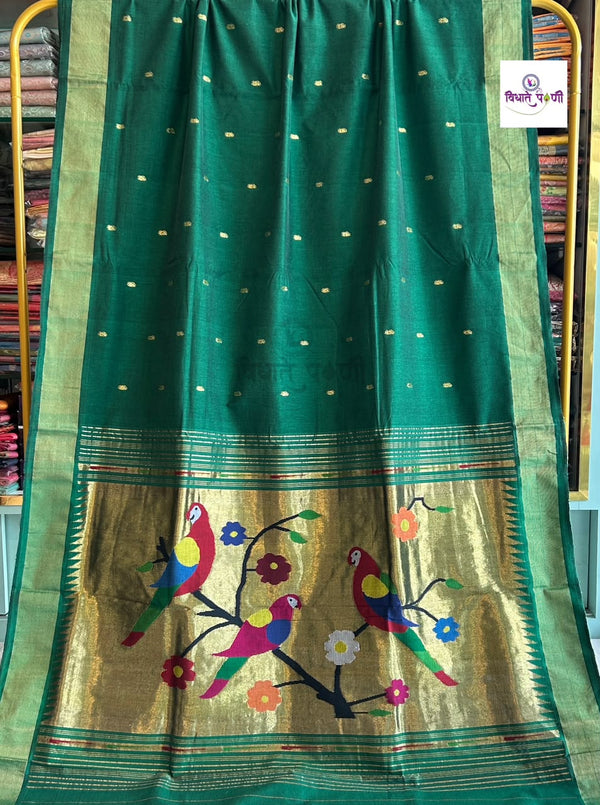
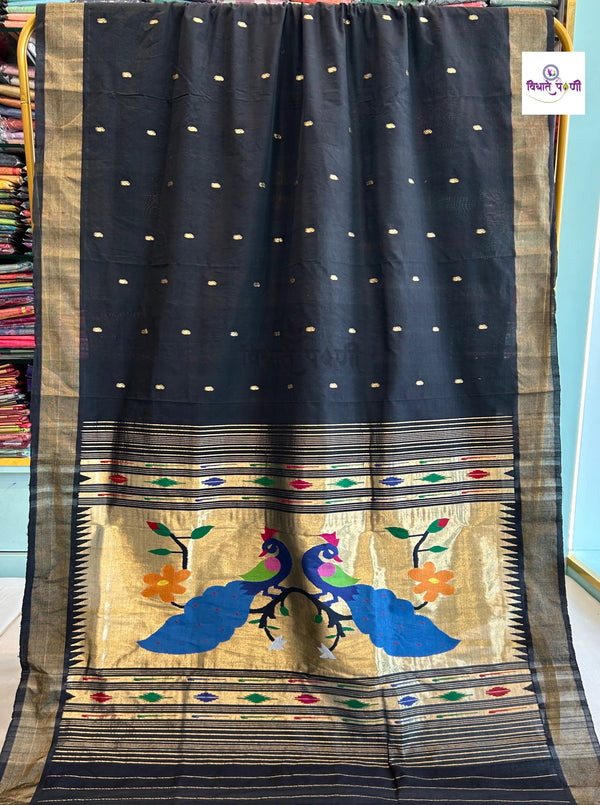
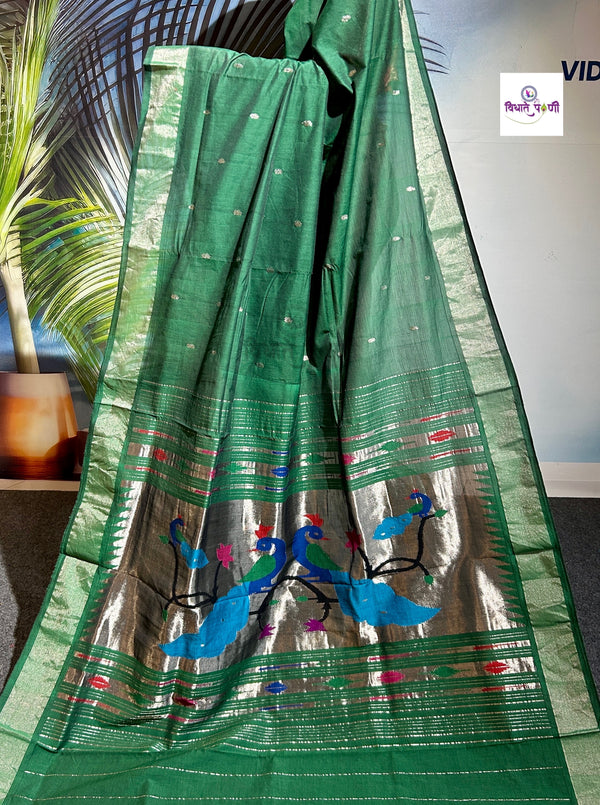
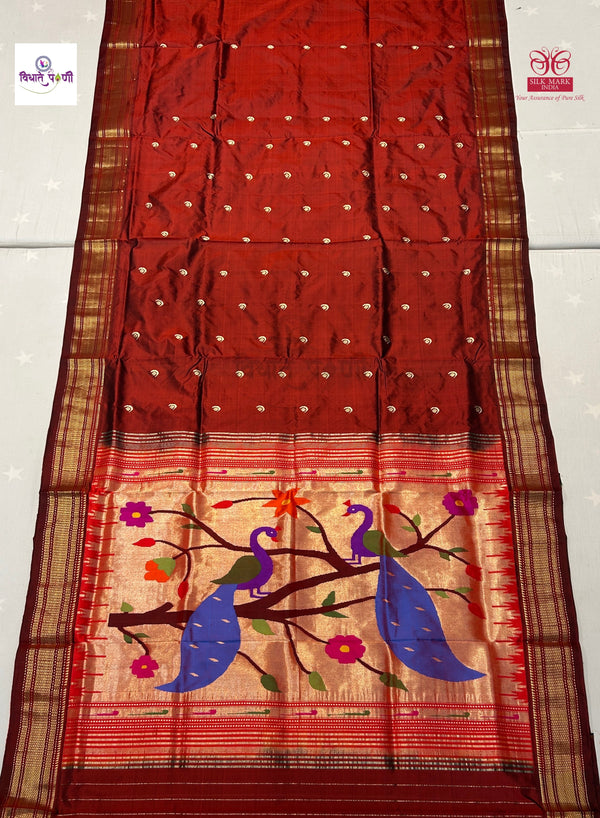
A Paithani is woven, not printed. On a traditional pit loom in Yeola, the weaver interlocks each coloured weft thread by hand, which is why the peacocks and parrots on the pallu read almost as cleanly from the back as from the front. That tapestry technique is what separates a real Paithani from everything made to look like one — and it is why a single saree can take anywhere from a fortnight to six months to finish.
We have been weaving in Yeola since 1987, now in the third generation. Everything on this page comes from our own looms: pure mulberry silk and handloom cotton, with real tested zari on the border and pallu.
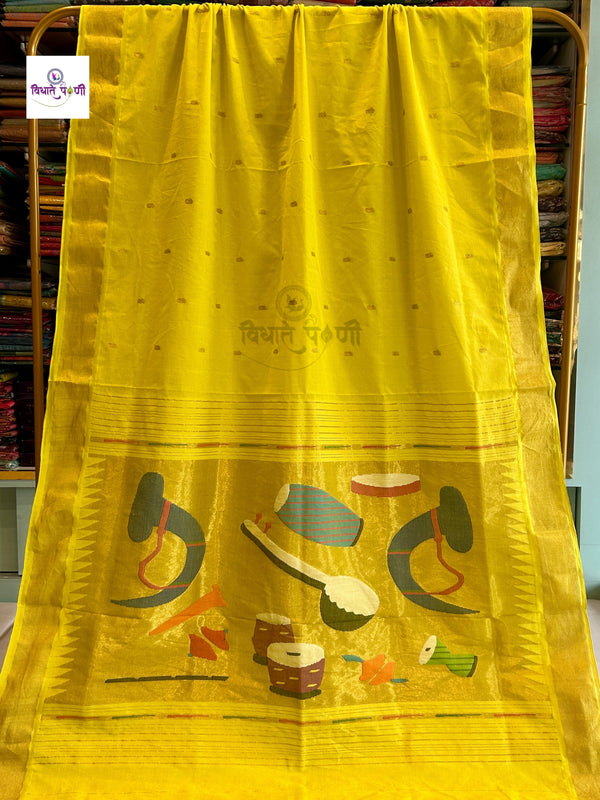
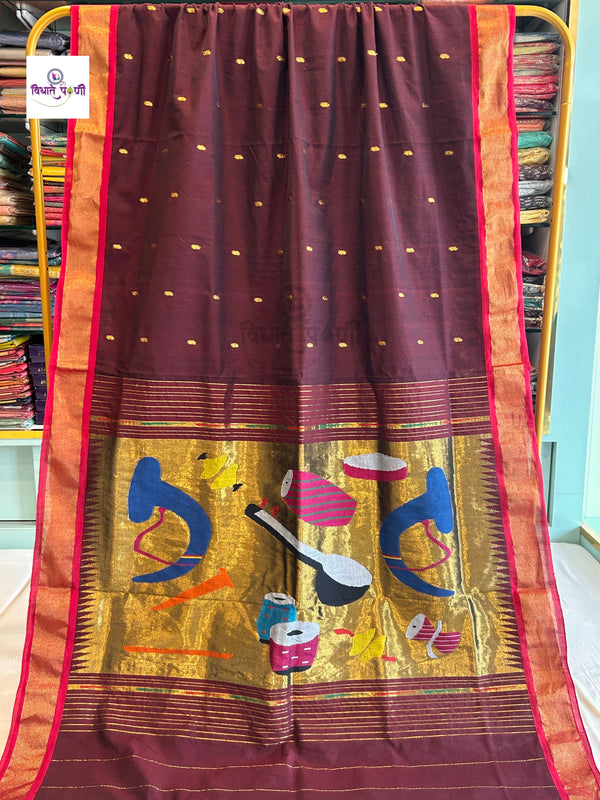
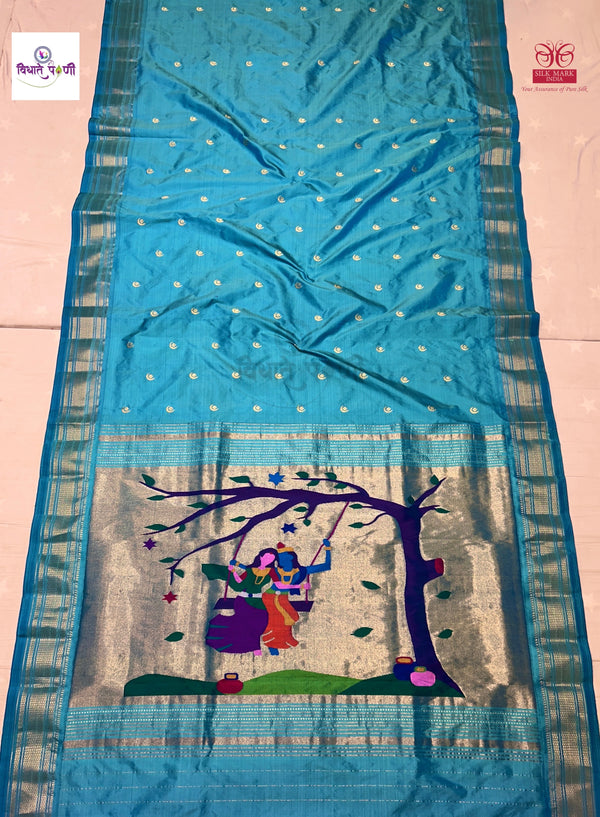
Finding the right one. The style is named for its border and pallu. Double Pallu carries the zari work at both ends and is the traditional bridal choice. Single Munia and Triple Munia are named for the rows of parrots along the border. Chandrakor Butta scatters crescent-moon motifs across the body. Brocade carries zari across the whole drape rather than only the edges. Handloom Cotton is the lighter, more affordable way into a genuine handwoven piece, and Tissue has a shimmer the others do not.
Prices here start around ₹6,000 for handloom cotton and rise through pure silk into bridal pieces representing months of a master weaver's work. If you would like to see a specific saree before deciding, we will show it to you live on WhatsApp.
How do you know a Paithani is genuine?
Turn the pallu over. On a handwoven Paithani the motifs are built by interlocking coloured weft threads, so the design on the reverse is clean and readable rather than a tangle of loose floats or a blurred mirror image. Then look at the zari: real tested zari has a soft, warm glow and a little weight to it, where synthetic metallic thread is uniformly bright and can blacken with age. Finally, look for small irregularities in the motifs — a handwoven parrot is never quite identical to the one beside it.
Handloom or powerloom — what is the difference?
A handloom Paithani is woven on a pit loom by one weaver, thread by thread, over anywhere from a fortnight to six months. A powerloom saree reproduces the look mechanically in a fraction of that time. Both can be pure silk, and we sell both — but they are not the same thing, and we say which is which on every product page. If a saree described as pure silk Paithani is priced far below the range below, it is almost certainly powerloom.
What does an authentic Paithani cost?
Handloom cotton Paithani starts at around ₹6,000. Traditional pure silk with real zari begins near ₹15,000. Premium handwoven pieces, with wider zari borders and more intricate pallu work, start around ₹30,000. Bridal double-pallu and brocade sarees — months of a master weaver's time — from about ₹75,000. What moves the price is the grade of silk, the quantity of real zari, and the hours at the loom.
Which Paithani suits a wedding?
For the bride, a double pallu or a brocade Paithani: the zari work is heaviest and the drape carries best in photographs. For the family, single or triple munia borders in pure silk sit right for the ceremony without competing with the bride. For the daytime functions around it, handloom cotton and tissue Paithani are lighter to wear in the heat. If you are buying several sarees for one wedding, message us on WhatsApp and we will help you plan the set.